






An old Muscogee story goes like this: A whip-poor-will steals a litter of baby possums and hides them in a hole. The possums’ mother cries and a noble turtle offers to help. The turtle, trudging through ash and mud, rescues the babies and returns them to the mother.
Now, it is said, the mother possum keeps her babies safe by carrying them on her back.
The story was one of many highlights from the fourth annual Muscogee Teach-in, where representatives from the Muscogee Nation shared their history and culture with an Emory audience of around 200 people.
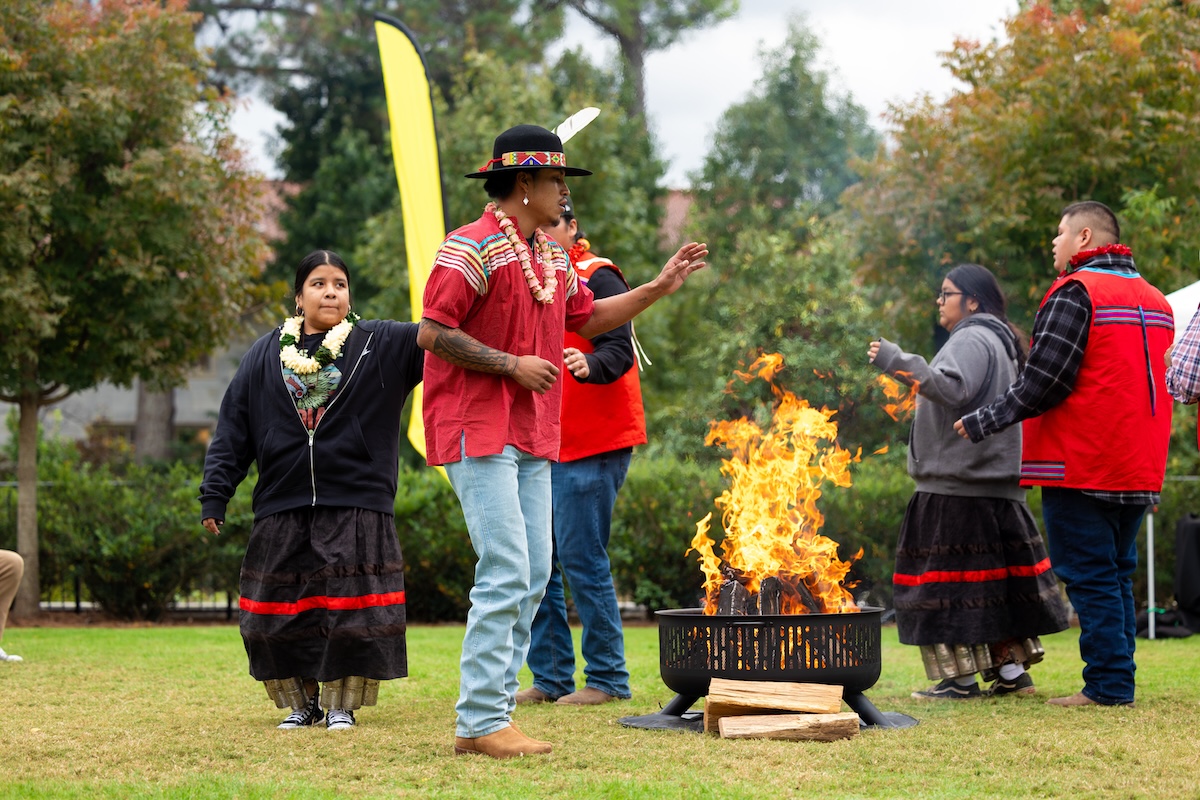
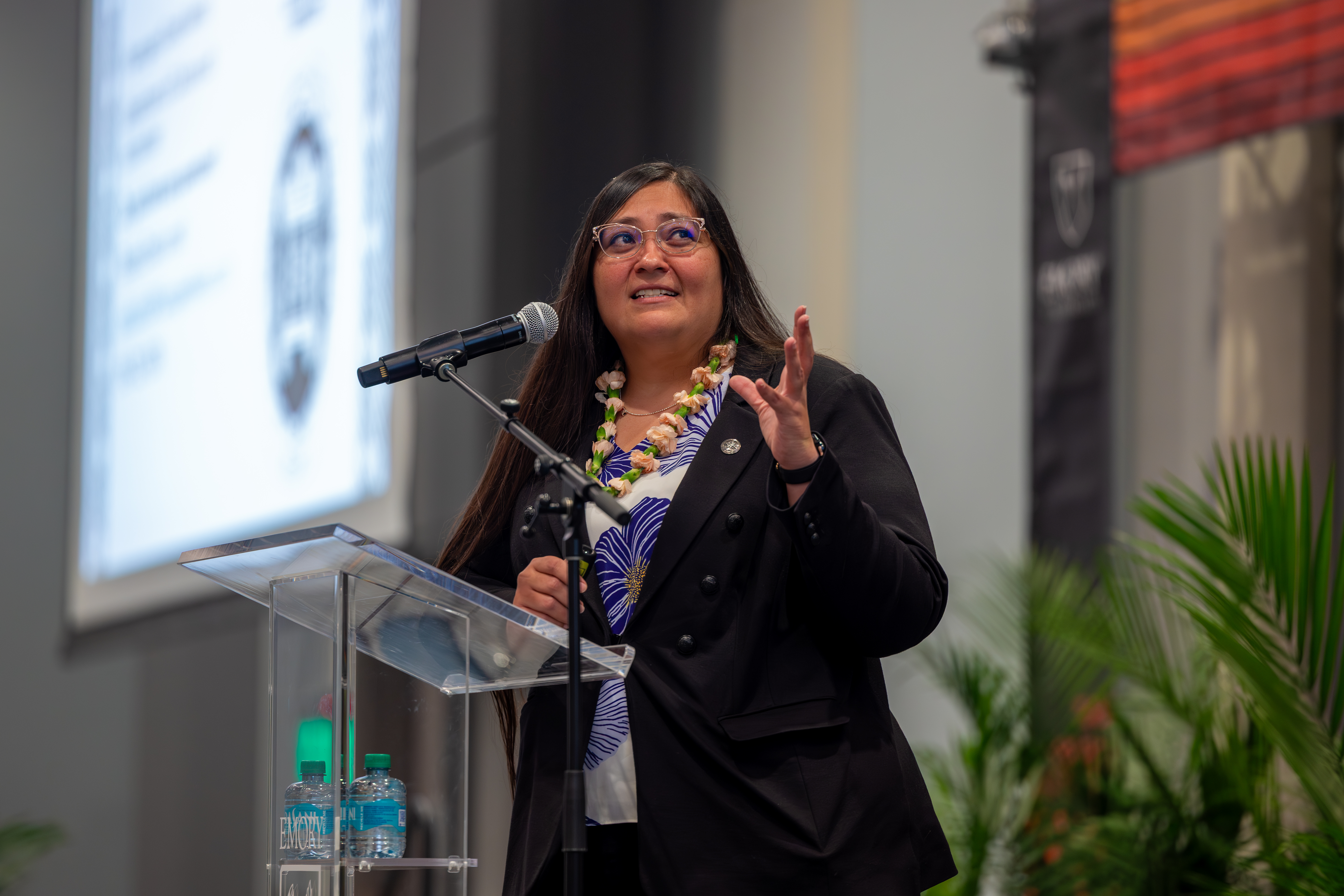
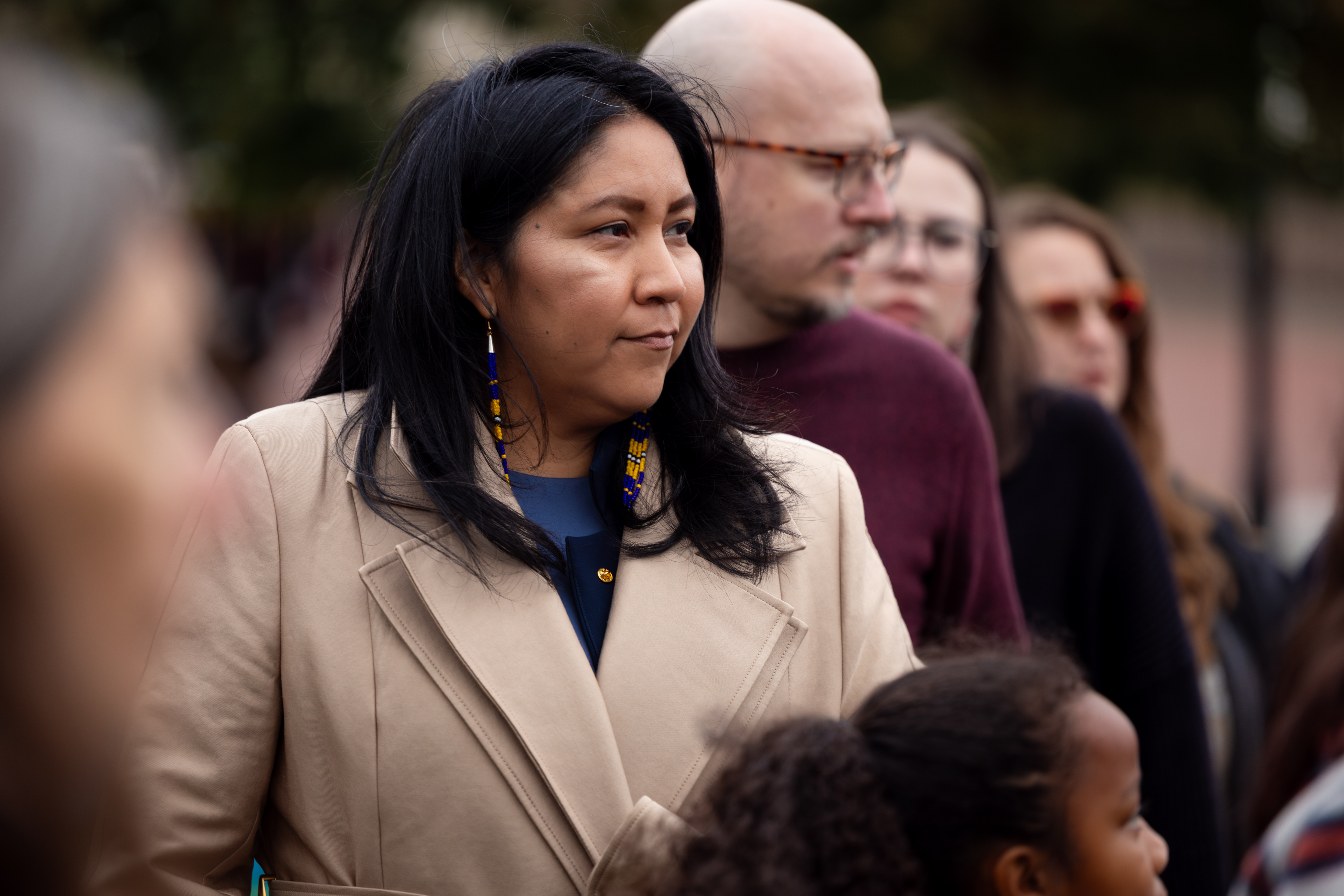
The event also featured remarks from Malinda Maynor Lowery, Emory Cahoon Family Professor of American History and a member of the Lumbee Tribe of North Carolina, and a keynote address from RaeLynn Butler, the Nation’s Secretary of Culture and Humanities. The program concluded with a ceremonial stomp dance on McDonough Plaza.
The teach-in began in 2021 as a collaboration between the Muscogee Nation and Emory to address the displacement of Indigenous sovereign nations from Georgia and across the Southeast. Emory’s Oxford and Atlanta campuses sit on land originally occupied by the Muscogee people, who were displaced in the early 1800s.
This year’s gathering was sponsored by Emory’s Center for Native American and Indigenous Studies, the Office of the Provost, the James Weldon Johnson Institute and the Office of Spiritual and Religious Life. Members of the Emory Native American Student Association provided on-site support, and Leilani Hoff — the group's co-president and a native Hawaiian — offered floral leis to each Muscogee representative.
The possum tale was read aloud at the event in its native language by a member of the Mvskoke Language Program, who then analyzed the syntax and grammar for the audience. It describes a mystery of the natural world through story: mother possums really do carry their litters on their backs.
The Nation traditionally spelled its name “Mvskoke,” which is still used when referring to the language itself. A key part of the Mvskoke Language Program’s mission is to develop more speakers of the language throughout Oklahoma.
In her speech, Lowery said the Emory community gathered “with deep respect” and “strives to be in good, accountable relationships with the Muscogee Nation.”
“The United States is on Indigenous land at all times,” she continued. “So, Native American and Indigenous studies is relevant to all of us.”
Part of that relationship, Lowery explained, includes building academic partnerships. Working with the College of Muscogee Nation (CMN), Emory is in the process of creating a minor in Native American and Indigenous Studies and currently offers three classes co-taught by faculty from CMN.
Butler’s keynote focused on cultural sovereignty, including efforts to repatriate Muscogee graves.
“Our mission is to revitalize, reclaim, promote, restore and preserve the rich cultural legacy, heritage and values of the Muscogee and Euchee people,” she said.
The Euchee, who were displaced with the Muscogee and also settled in Oklahoma, are close friends of the Nation. As an extension of this year’s teach-in, a group from the Euchee Butterfly Farm visited the Oxford Farm to discuss its practices and share seeds for planting.
"Secretary Butler reminded us that the Nation continues to be present in Georgia and the Southeast, even though they're currently based in Oklahoma,” said Beth Michel, senior associate director for the Emory Center for Native American and Indigenous Studies.
“That connection to the land remains,” she added, “whether it's trying to work with institutions to bring home ancestors or cultural belongings — or trying to establish new spaces where the Nation can offer educational awareness."
Connections across time
The teach-in is always a meaningful event for Hailey Cade, co-president of the Emory Native American Student Association and a citizen of the Northern Cheyenne Nation. A junior economics major, she has attended the event each year she’s been at Emory.
“I like being around Indigenous people on campus,” she said. “It always brings a familial energy, and I try to reciprocate that.”
“This is always an important opportunity for our campus,” Michel said. “It’s also important to the Muscogee representatives who come back to their homeland. We understand it can be a healing visit. Our campus community has the privilege to gather with the Nation and take away lessons on humility and leadership.”
The Rev. Chebon Kernell, a Muscogee elder, led the stomp dance.
“Everything that surrounds us still knows our people,” he told the attendees. “It all still yearns to see us. It wants to hear the songs that we sing and the words that we say. The trees bore witness to our ancestors.”
The stomp dance, he explained, helps strengthen the dancers’ connection with their homeland.
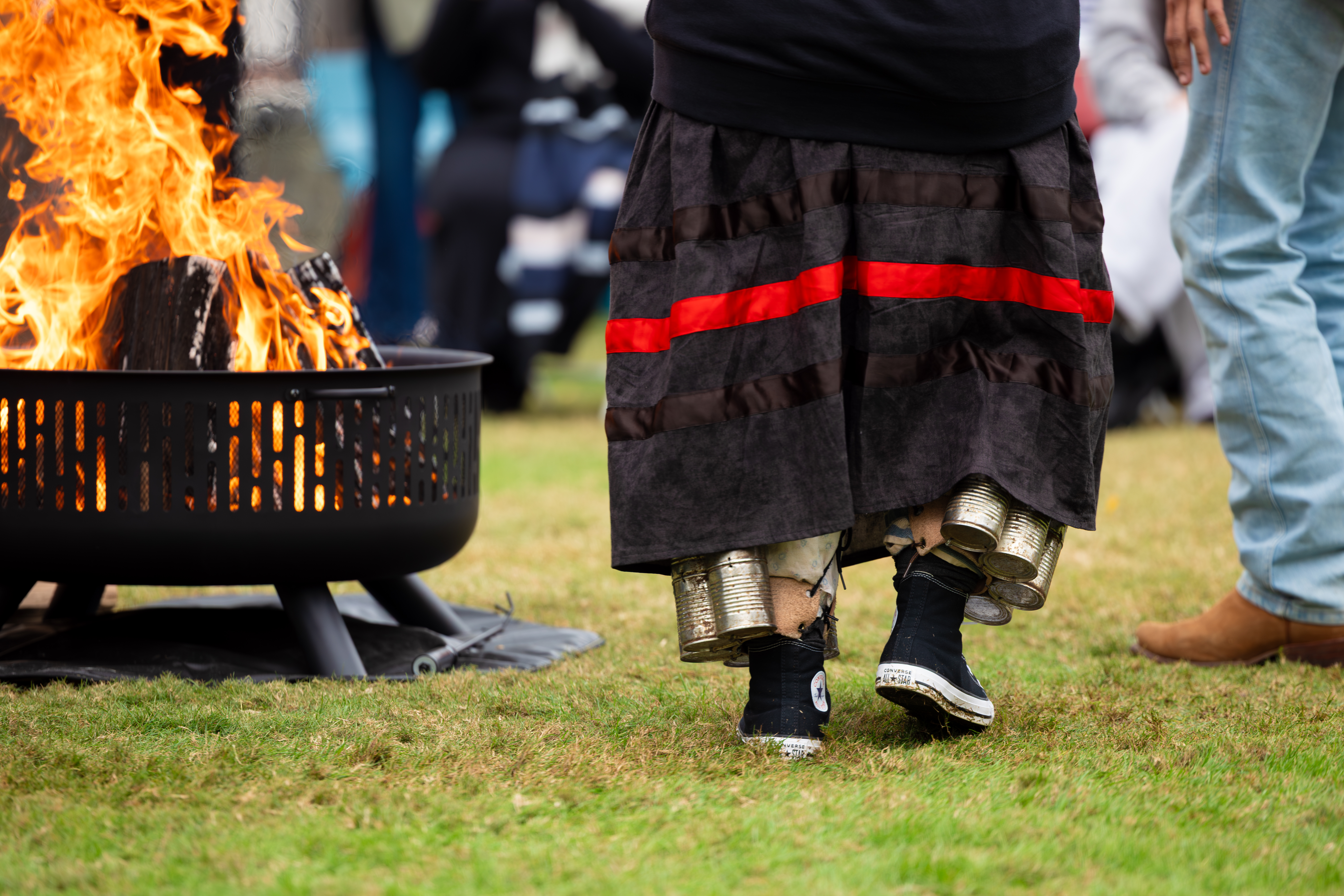
Traditionally, women dancers set the rhythm by stomping with turtle shells fastened to their ankles. This time, they used tin cans. More than 50 attendees joined a circle around a bonfire that warmed the late fall air, and together they followed the rhythm of the cans and the calls of the Muscogee dancers.
“I think being able to practice ceremony and tradition on land that is yours is really special,” Cade said of the Muscogee representatives. "It is very empowering, especially for it to be happening on my college campus.”
“The stomp dance is my favorite part every year,” she added. “You can look at the ground and see a physical imprint of the Muscogee. I really enjoy that they leave something behind, too.”