
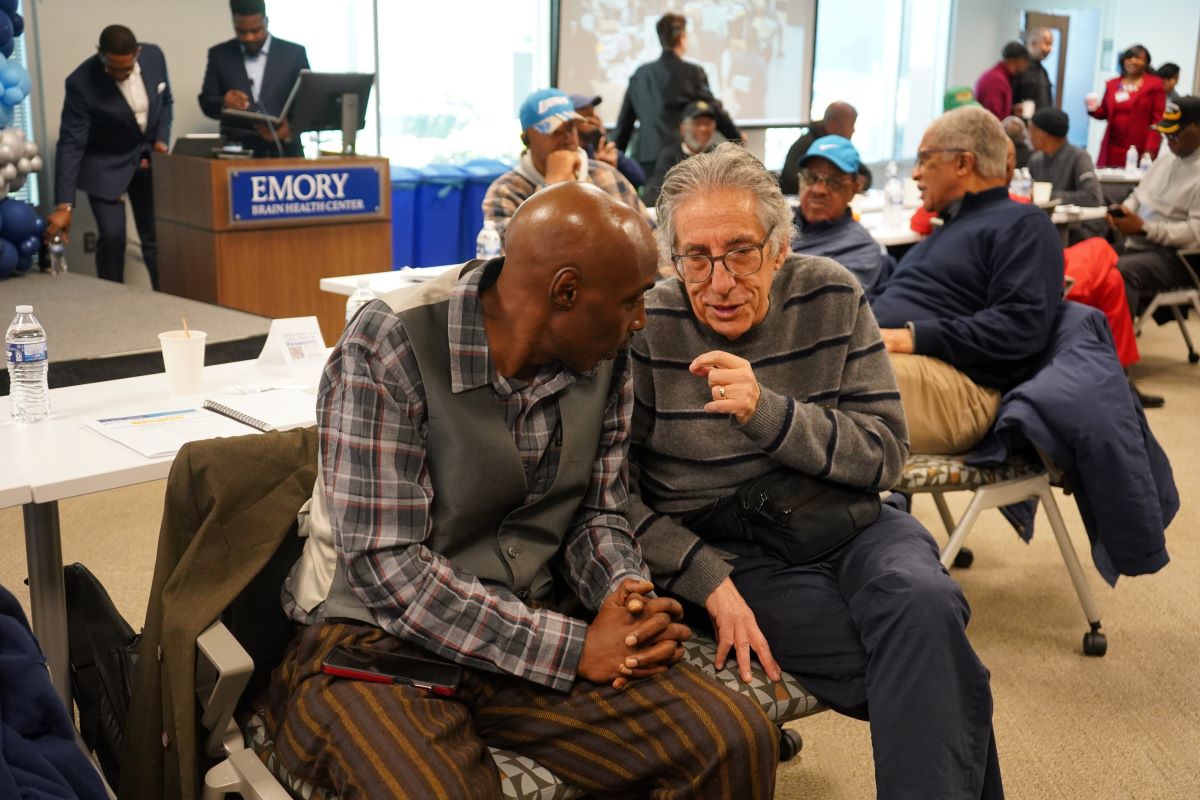
ATLANTA — Researchers at Emory University have identified effective, community-driven strategies to increase participation by underrepresented populations in Alzheimer’s disease research, according to a new study published in Alzheimer’s & Dementia, the journal of the Alzheimer’s Association.
The research was conducted by investigators at the Goizueta Alzheimer’s Disease Research Center, part of the Emory Goizueta Brain Health Institute, and highlights how targeted, community-based outreach can significantly improve research enrollment among African American adults. This population faces a higher risk of Alzheimer’s disease and related dementias but remains underrepresented in clinical research. Older African Americans, though underrepresented in research studies, have an increased risk of Alzheimer’s disease.
The study was led by Antoine R. Trammell, MD, MPH, along with James J. Lah, MD, PhD, associate director of the Goizueta Alzheimer's Disease Research Center, and Monica W. Parker, MD, who leads the center’s outreach and recruitment efforts. All authors are faculty members in the Emory University School of Medicine.
They analyzed data from 194 adults enrolled in the center’s research studies between 2016 and 2024. The findings show that intentional outreach efforts — including health education events and partnerships with trusted community organizations were strongly associated with increased participation among African American adults.
Among the key findings:
- African American participants were more likely to attend outreach events before enrolling in the study than non-Hispanic white participants. Community-based events held in Black communities, including churches and neighborhood centers, were especially effective in engaging participants. Although they are typically considered the most difficult group to engage in research, African American men enrolled more quickly than other groups, reflecting the impact of programs with intentional, focused content relevant to the audience.
- The study underscores the importance of recruitment strategies that are structured, culturally responsive and informed by community input, with an emphasis on building trust through sustained local partnerships.
“Alzheimer’s disease disproportionately affects African American and Hispanic communities, yet these populations are consistently underrepresented in research,” Lah says. “Our findings show that intentional, community-informed outreach can help close that gap and improve the relevance of Alzheimer’s research for the communities most affected.”
The researchers note that future studies should examine long-term participant retention and assess whether these outreach strategies can be scaled across other regions and populations.
The study was supported by the National Institutes of Health’s National Institute on Aging and the Georgia Department of Human Services through Georgia Memory Net.
About the Emory Goizueta Brain Health Institute
The Emory Goizueta Brain Health Institute advances innovation in brain health prediction, prevention and treatment. Its multidisciplinary teams study the mechanisms of brain disease and develop new therapeutic strategies and biomarkers. The institute is part of Emory University. Learn more at goizuetabrainhealth.emory.edu.