
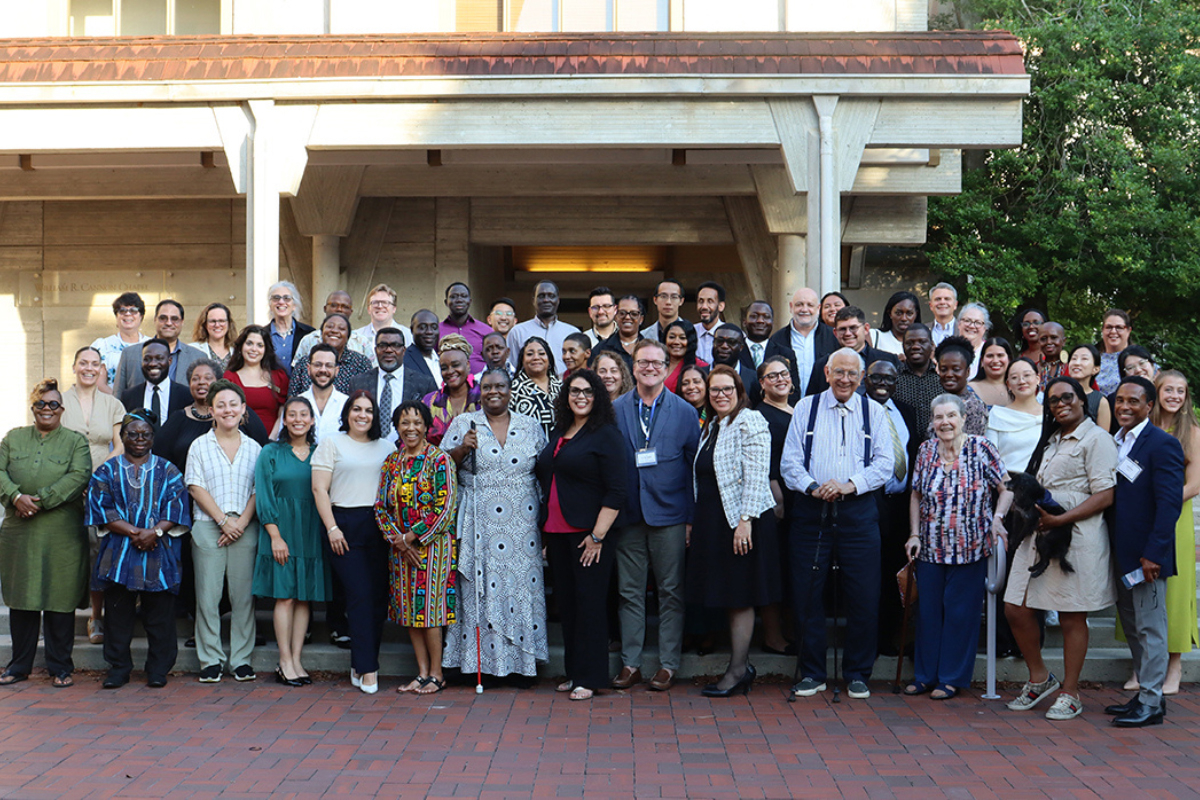
Emory University has received a grant of $10 million from Lilly Endowment Inc. to help transform the education of lay ministers. Based at Emory’s Candler School of Theology, the grant will further develop the school’s La Mesa Academy for Theological Studies and build a strong, sustainable network of institutions dedicated to the theological education of lay ministers.
Candler will collaborate with the Asociación para la Educación Teológica Hispana (in English, the Association for Hispanic Theological Education, or AETH) and several denominational partners in this work.
The large-scale collaborative grant is being funded through Lilly Endowment’s Pathways for Tomorrow Initiative. This initiative is designed to help theological schools across the United States and Canada as they prioritize and respond to the most pressing challenges they face as they prepare pastoral leaders for Christian congregations both now and into the future. The grant to Emory is one of 45 that was approved in this competitive round of funding to support theological schools as they lead large-scale collaborations with other seminaries, colleges and universities, and other church-related organizations.
The network of institutions Candler and its partners aim to build through this grant will help strengthen the theological education of lay ministers, a group outside the population traditionally served by university-based theology schools such as Candler, which generally focus on graduate degrees.
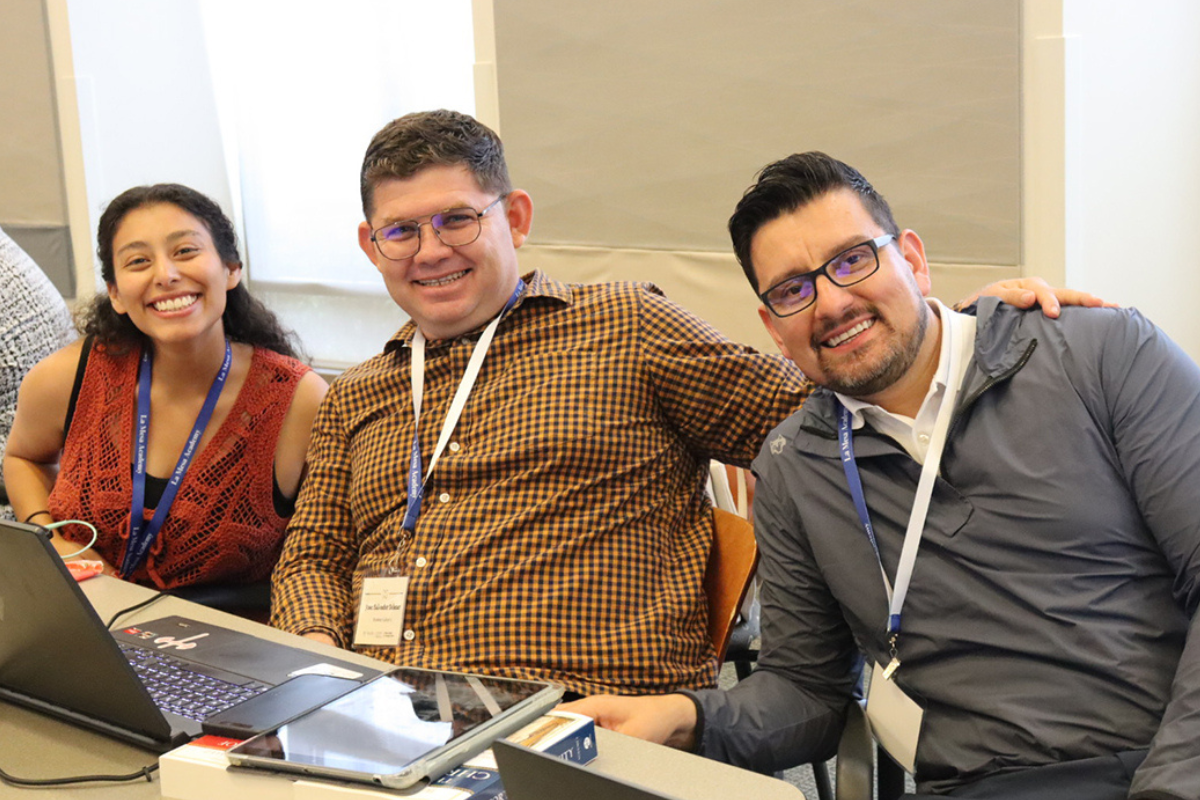
La Mesa students train for ministry in a hybrid certificate program.
The goal of the grant is a natural outgrowth of work Candler has undertaken as part of three previous Pathways grants funded by Lilly Endowment.
The first underwrote a Candler-led asset-based community organizing process with Latine, Korean/Korean American, African immigrant and charismatic and Pentecostal church leaders, which identified several needs, including an accessible educational certificate for lay ministers. The second and third grants led to a series of initiatives to address these needs, including the creation of La Mesa Academy for Theological Studies at Candler, a multicultural, multi-language program that offers a fully accredited graduate certificate as part of Emory University.
Ted A. Smith, Charles Howard Candler Professor of Divinity at Candler, and Joanne Solis-Walker, associate dean of La Mesa Academy, are co-principal investigators of the grant.
Both credit AETH as an essential partner throughout the Pathways process and a major collaborator in establishing La Mesa. The organization will continue as a close collaborator in this most recent Pathways grant.
As a network of people and institutions working to enhance the excellence of Hispanic theological education programs, AETH has focused historically on Hispanic Bible institutes, but has expanded in recent years to offer guidance to white and Anglophone institutions seeking to better serve their Latine students.
“AETH and Candler have complementary gifts: AETH channels the wisdom of Bible institutes that have long excelled in certificate-level pastoral education, and Candler brings capacities that come only with a top research university,” says Solis-Walker.
AETH executive director Jessica Lugo agrees. “Since 1991, AETH has stood alongside Bible institutes and faith communities serving on the front lines, and this initiative allows us to multiply that impact by creating new, accessible pathways for the thousands of lay ministers who sustain the life of our churches,” she says.
“By bringing together the deep wisdom of our grassroots institutions with the resources of an institution like Candler, we are building an ecosystem of formation that is rigorous, culturally grounded, and essential for the future of our congregations,” Lugo adds.
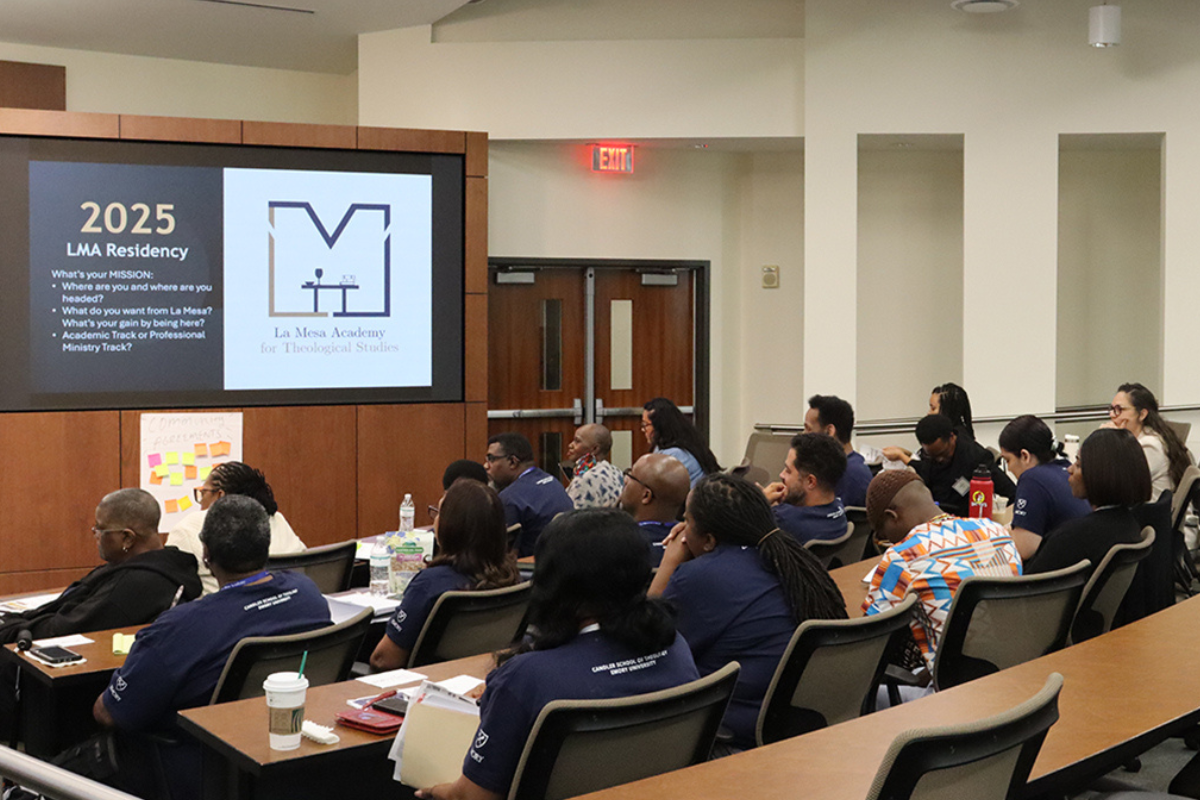
La Mesa students at the 2025 residency at Candler.
- Organizational capacity building
- Support for the transformation of the Antioquía Center into the Antioquía Accelerator, including funding for the Justo and Catherine González Resource Center
- Funding for the AETH-led components of the Biblioteca Digital Pitts, an initiative to make Spanish-language theological resources available to individual and institutional members of AETH via Candler’s Pitts Theology Library — which effectively grants access to thousands of lay ministers, lay ministry students and Bible institute faculty across the Americas
According to Smith, Candler and AETH have worked hard to develop their relationship as a “just and durable partnership.” This concept emerged in Candler’s earlier Pathways grants as an approach to institutional collaboration that moves beyond transactional models in which each party collaborates only as much as necessary to serve its own self-interest.
“We want our Pathways partnerships to be ‘just’ in the sense of being marked by reciprocity, fairness, respect and attention to the equal value of all individuals and institutions. We also want them to be ‘durable’ in the sense that they should last longer than one single project in which our interests happen to align,” Smith says. “We want to build long-term relationships of mutual support that will give rise to new projects we could not have imagined on our own, like La Mesa.”
Many of Candler and AETH’s partners in founding La Mesa were from ecclesial traditions with long experience in forming pastoral leaders in certificate programs. With this new phase, project leaders are developing La Mesa to serve growing numbers of lay ministers in denominations that have typically required the master of divinity degree for ordination, including the Christian Church (Disciples of Christ), Presbyterian Church (USA), The Episcopal Church, The United Methodist Church and The Vineyard. These denominations are seeing increasing numbers of lay ministers serving smaller congregations, new church plants, congregations centered in immigrant communities and large churches as members of pastoral staffs.
“Different traditions name the pastoral leaders we are gathering together as ‘lay ministers’ in different ways,” says Smith. “They have different roles and expectations, but they share a desire for accessible theological education that offers spiritual formation, intellectual rigor and deeply contextual learning. They are helping us create a La Mesa that does all those things.”
Strom notes that this initiative for the education of lay ministers is part of the school’s larger strategy of building a continuum of offerings in theological education to give more people access. He sees it as a “yes/and” situation rather than an “either/or.”
“Our work in education for lay ministers will complement, not displace, the master’s and doctor of ministry degrees that have been the historic core of the school,” Strom says. “It expands Candler’s offerings in ways that let us live more fully into our mission to educate faithful and creative leaders for the church’s ministries throughout the world.”
Lilly Endowment launched the Pathways for Tomorrow Initiative in 2021. Since then, it has provided grants totaling more than $700 million to support 163 theological schools in efforts to strengthen their own educational and financial capacities and to assist 61 schools in developing large-scale collaborative endeavors.
About Lilly Endowment Inc.
Lilly Endowment Inc. is a private foundation created in 1937 by J.K. Lilly Sr. and his sons Eli and J.K. Jr. through gifts of stock in their pharmaceutical business, Eli Lilly and Company. While those gifts remain the financial bedrock of the Endowment, it is a separate entity from the company, with a distinct governing board, staff and location. In keeping with the founders’ wishes, the Endowment supports the causes of community development, education and religion and maintains a special commitment to its hometown, Indianapolis, and home state, Indiana. A principal aim of the Endowment’s religion grantmaking is to deepen and enrich the lives of Christians in the United States, primarily by seeking out and supporting efforts that enhance the vitality of congregations and strengthen the pastoral and lay leadership of Christian communities. The Endowment also seeks to improve public understanding of about religion and lift up in fair, accurate and balanced ways the roles that people of all faiths and various religious communities play in the United State and around the globe traditions in the United States and across the globe.