
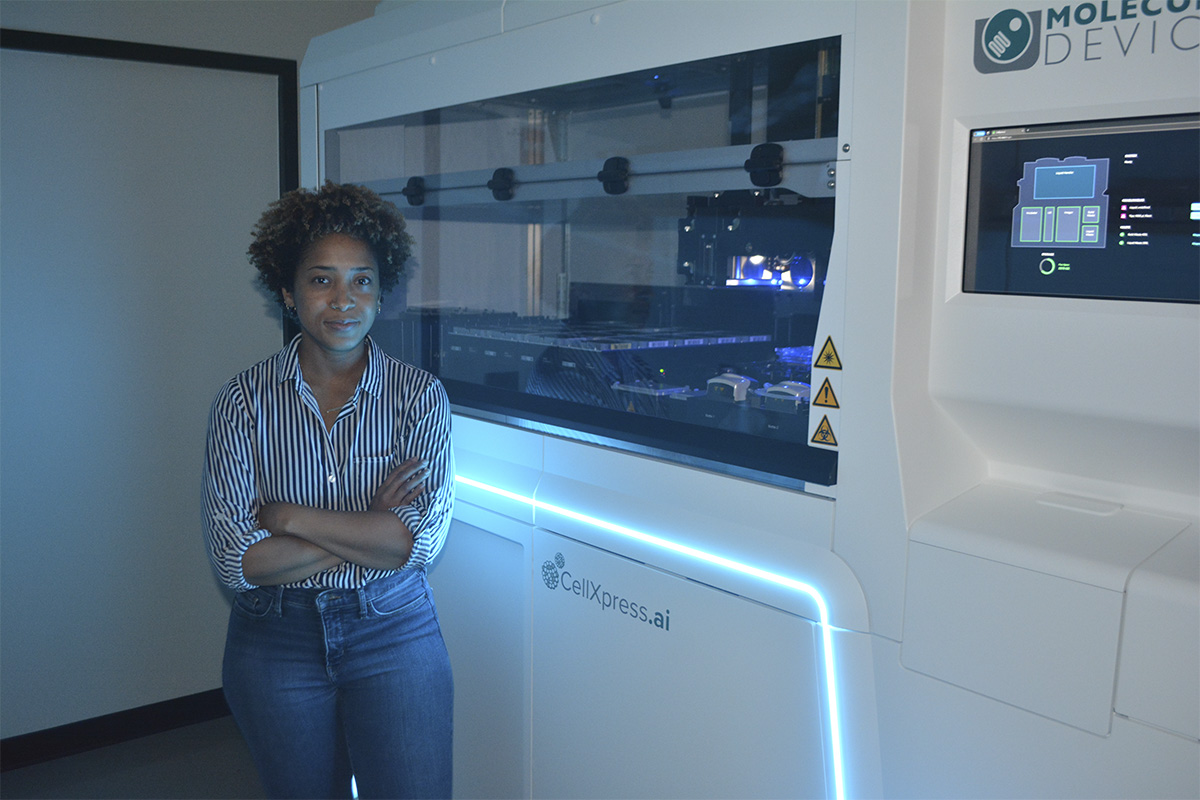

Emory scientists have installed an automated cell culture system designed specifically for human organoids. The CellXpress.ai system, combining robotic liquid handling and an incubator with a confocal microscope, is one of just four currently operating in the United States.
Three labs in the Department of Human Genetics — comprising the Brain Organoid Hub — acquired the apparatus with the help of a $1.5 million grant from the National Institutes of Health. The Hub’s members want to facilitate access to the advanced technology, and are making the CellXpress.ai system available to other researchers at Emory or in Georgia.
Organoids are used to study diseases, test drugs and develop regenerative therapies because they provide a model that is closer to human biology than animals do. The organoids are grown from induced pluripotent stem cells, which are in turn derived from human skin or blood cells.
While research in the Hub’s three labs, led by Steven Sloan, Jimena Andersen and Fikri Birey, focuses on brain development and degeneration, the cell culture system can also be used to study the heart, lungs, intestines or kidneys, for example.
“We anticipate that this system could boost our ability to generate organoid cultures, on a scale that would be difficult for a human researcher to manage without help,” says Birey, assistant professor of human genetics at Emory University School of Medicine.
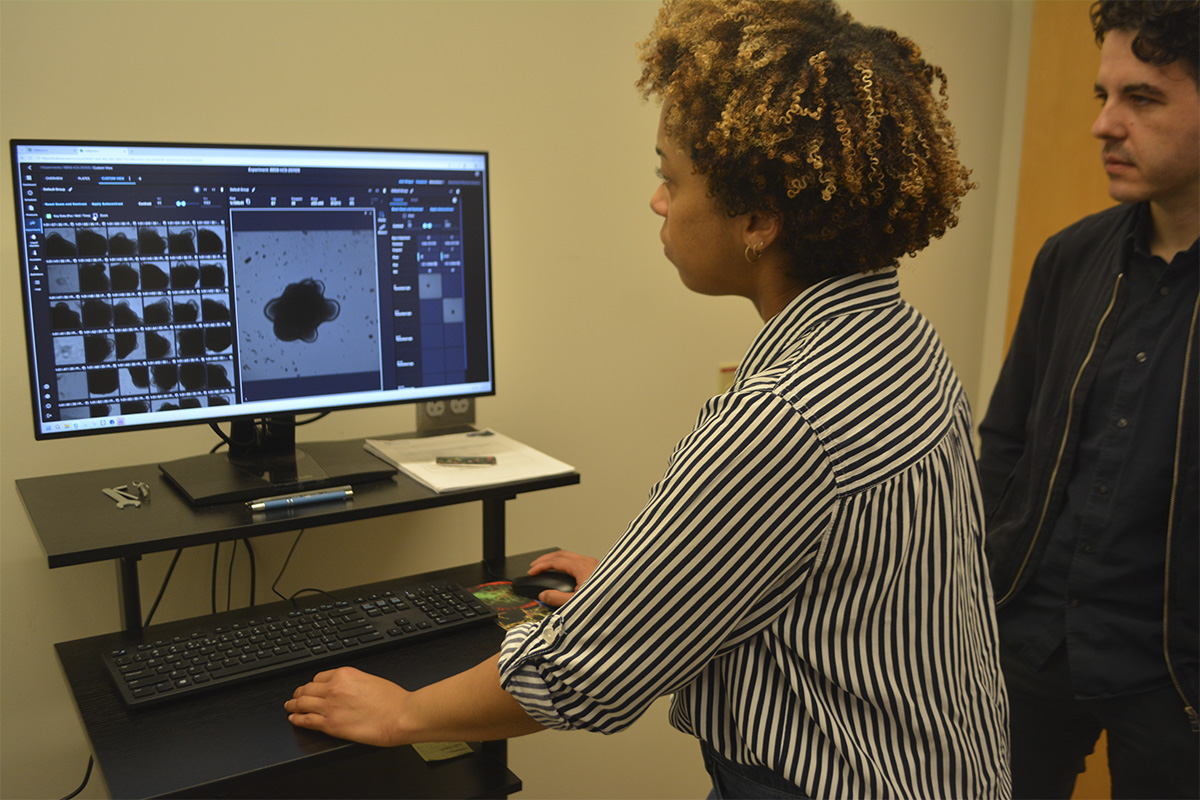
Organoid cultures must be tended and monitored for weeks or months; the automated system will do so tirelessly and consistently. Artificial intelligence comes into play because the system can analyze cell morphology patterns and determine whether developing cells have differentiated or not. The system can culture 20,000 organoids simultaneously, according to the team’s NIH grant application.
“For us, using this system is really about maximizing consistency and reproducibility,” says Alexia King, supervisor of the Brain Organoid Hub.
Researchers interested in testing or using the Cellxpress.ai system are invited to contact King.