
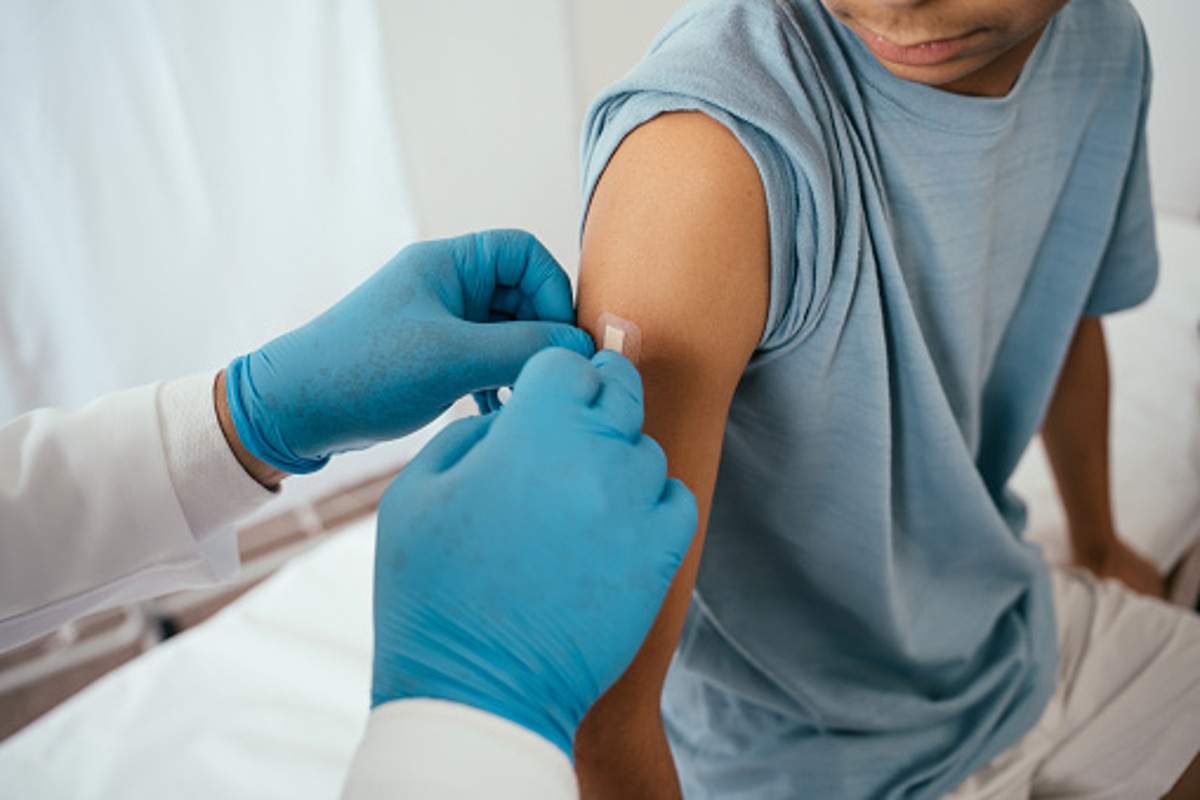
In the fight against COVID-19, responsible for more than 1.2 million deaths nationwide, new research from Emory University points the way toward even more effective vaccine formulations against future strains.
Published in Science and Translational Medicine, the study assessed the durability, breadth and magnitude of antibodies in 24 participants who received the 2023-24 vaccine, targeting the then-dominant XBB.1.5 Omicron variant. The results showed that the 2023 coronavirus vaccine produced antibodies with a half-life of more than 500 days. This means that the half-life, or the span in which at least 50% of the antibodies remain detectable, was more than 16 months post-vaccination.
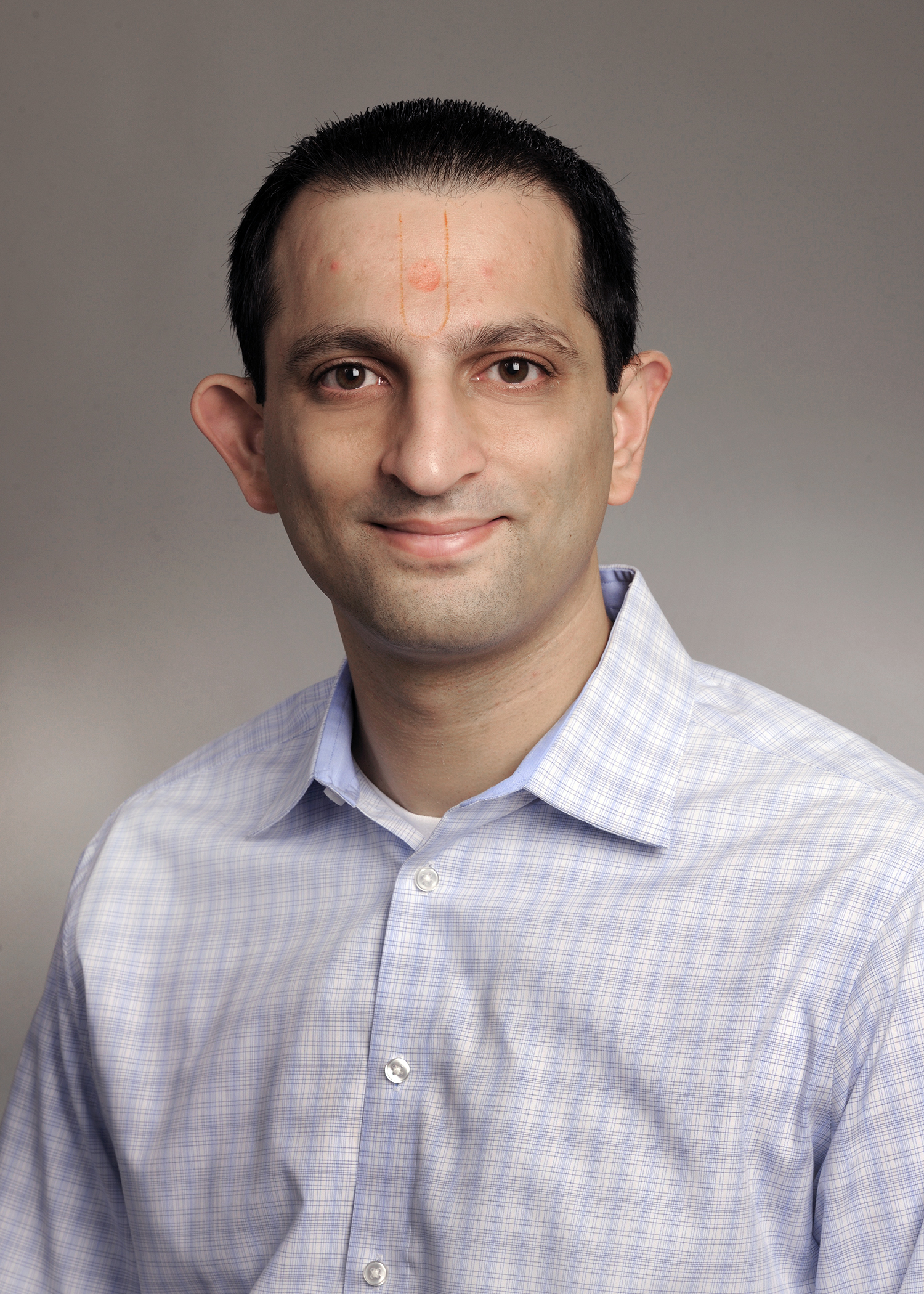
Mehul Suthar, PhD, professor at Emory University’s School of Medicine, and lead author on the study.
During the 6-month study, researchers assessed participant memory B cells, responsible for recognizing pathogens from prior infection; binding antibodies, which flag pathogens; and neutralizing antibodies, which prevent replication. Additionally, study participants produced cross-reactive antibodies for both the ancestral, or the original WA1 strain, as well as the Omicron XBB.1.5 variant.
What made the 2023 COVID-19 vaccine different?
In a break from tradition, the 2023-24 coronavirus vaccine was formulated as monovalent immunization, meaning it was comprised of only one spike protein, designed to target the then-dominant Omicron variant XBB.1.5. Prior vaccines were bivalent, or formulated with two spike proteins, intended to combat both the ancestral and newer or more dominant strains.
Immune imprinting likely enabled participants in this study — all of whom received the first ancestral coronavirus vaccine — to have a 2.8-fold increase in cross-reactive antibodies, designed to target both the ancestral WA1 variant, as well as the Omicron XBB.1.5 variant.
“Our study shows that with a monovalent vaccine targeting dominant coronavirus strains, we are more broadly protected against older strains, as well as more recent ones, and if something else emerges, we would have an antibody response likely to protect against this newer variant,” says Suthar.
The importance of updated vaccines against an evolving virus
With more than 12,700 coronavirus mutations, five strains and nearly 4,00 variants, the study highlights the need for continued research, as well as the significance of receiving updated immunizations.
“SARS-CoV-2 has a continual transmission cycle and emergence of variants that can constantly jeopardize the effectiveness of vaccines,” says Suthar, also a professor at the Emory Vaccine Center. “However, what the data and evidence continually show is that receiving the updated COVID-19 vaccine boosts these cross-creative antibodies, which helps protect those with pre-existing conditions, the elderly and the immunocompromised,” he adds.
Coronavirus significantly affects mitochondrial function, or energy production, impacting the heart, kidneys, liver, and lymph nodes. This puts the elderly and those with cancer, blood and autoimmune disorders, stroke, obesity and pre-existing conditions of the heart, kidney, lung and liver at an increased risk of severe disease.
Suthar also emphasized that COVID-19 vaccines are safe, and even those with healthy immune responses benefit from protection against hospitalization, mortality, and long COVID-19.
This study was funded by National Institutes of Health awards P51OD011132, 3U19AI057266-17S1, 1U54CA260563, HHSN272201400004C, 75N93021C00017; and National Institute of Biomedical Imaging and Bioengineering awards 75N92019P00328, U54EB015408, and U54EB027690.
It was additionally funded by the Emory Executive Vice President for Health Affairs Synergy Fund and Woodruff Health Sciences Center 2020 COVID-19 CURE awards; the COVID-Catalyst-I3 funds from the Woodruff Health Sciences Center and Emory School of Medicine; the National Institutes of Health Vaccine Center; and the Pediatric Research Alliance Center for Childhood Infections and Vaccines and Children’s Healthcare of Atlanta.
Emory co-authors include: Sanjeev Kumar, Shilpi Jain, Bushra Wali, Veronika I. Zarnitsyna, Devyani Joshi, Madison L. Ellis, Lilin Lai, Ansa A. Malik, Tarrant O. McPherson, Anamika Patel, Susanne Linderman, Kareem Bechnak, Isabel Paredes, Ralph Tanios, Bahaa Kazzi, Serena M. Dib, Matthew B. Litvack, Sonia T. Wimalasena, Caroline Ciric, Richard H. West, Christina A. Rostad, Eric A. Ortlund, Vineet D. Menachery, Sri Edupuganti, Nadine Rouphael, Alberto Moreno, Jens Wrammert, Mehul S. Suthar.
Additional co-authors include researchers from the NIH, Stanford and the CDC.