
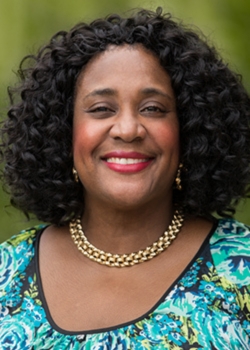
Cynthia Whitehead-Laboo saw many changes in student mental health trends during her 30 years as a clinical psychologist at Emory.
The decision launched a 35-year career of delivering mental health support to thousands of college and university students. A licensed psychologist, Whitehead-Laboo retired from Emory in September as the associate director of clinical services with Counseling and Psychological Services (CAPS) and adjunct clinical associate professor of psychology with the university.
“The freedom of retirement is amazing,” she says, describing the daily walks, water aerobics and regular domestic and international travel that she and her also-retired spouse are enjoying together.
Whitehead-Laboo’s legacy of outstanding service as a clinical psychologist also includes classroom teaching and dozens of leadership roles, workshops and presentations at Emory and on the local and national levels. She is also the recipient of numerous awards and other recognitions.
Born in Ohio and raised in California, Whitehead-Laboo went on to earn three degrees in psychology: a bachelor’s from Spelman College followed by a master’s and PhD from The Ohio State University.
“In graduate school, my favorite practicum training was in the counseling center,” she says. “I loved the college mental health setting and knew I wanted to continue working in that setting.”
As a newly minted PhD, Whitehead-Laboo spent three years with the Georgia Institute of Technology counseling center as director of clinical training, coordinator of clinical services and psychotherapy case manager.
In 1993, she joined the CAPS team to direct the Emory Helpline for students and develop a program to support students with eating disorders. Over the years, she held several CAPS positions, including staff psychologist and interim co-executive director.
“Since joining CAPS, Dr. Whitehead-Laboo has led numerous pivotal initiatives, including the Eating Disorders Program, which entailed promoting awareness and prevention of eating disorders for the entire Emory community, and headed the Advanced Psychotherapy Practicum,” says Tenille R. Gaines, CAPS executive director.
“For the past 18 years, Cynthia has overseen clinical operations with clarity, vision and an unwavering commitment to excellence,” Gaines adds. “She has counseled countless Emory students and mentored generations of Emory staff and trainees, developed critical policies and played a vital role in the university’s campus community.”
Three decades of perspectives on student mental health services
“My years in student mental health have seen many changes in society, including some that impact the complexity and acuity of mental health clients’ needs and concerns,” Whitehead-Laboo says.
“One is the global proliferation of news media, entertainment media and social media,” she adds. “One result is that we have less in-person human engagement, and that has a lot of implications.”
According to Whitehead-Laboo, media allows us to consciously or unconsciously compare ourselves to others, often celebrities in the news and characters in fiction. Such personalities are frequently portrayed as nearly perfect individuals living nearly perfect lives and usually solving major problems in the short timeframe of a TV program or feature film.
“As a result, some young people come to believe that their lives are somehow lacking, not going well and something is wrong, especially when they experience feelings that are difficult to handle,” says Whitehead-Laboo.
“In the past, students were more likely to talk with parents, mentors or other elders who could help them understand that difficult feelings are simply part of being human,” she says. “Such support still exists, but young people may not seek it as often as previous generations. Instead, they substitute social media, which may reinforce negative feelings about self.”
Students coping with such issues can experience diminished capacity to deal with normal, negative feelings, leading to mental health concerns that may eventually warrant psychotherapy.
“For example, in recent years we have had requests for programs on imposter syndrome, a concept not prevalent 20 or 30 years ago,” Whitehead-Laboo says. Imposter syndrome is a psychological condition that causes a person to persistently doubt their own abilities or achievements and fear they will be exposed as a fraud, notwithstanding their proven abilities and success.
There have also been many positive developments over the years, Whitehead-Laboo notes, such as dramatic improvements in psychotropic medications and the destigmatization of mental health.
“It’s wonderful that a growing number of celebrities are speaking out about their own mental health challenges and advocating for mental health self-care,” she says. “This encourages students throughout higher education to seek services they really need.”
Another positive change is that Emory and other colleges and universities nationwide now embed therapists in selected departments and schools. At Emory, those organizations currently include Athletics and the schools of nursing and medicine. Embedded therapists work with students in those areas, tailoring programming to specific needs.
“I am delighted with the increased focus on wellness and helping students to flourish, which is a proactive way to help students before they need psychotherapy,” says Whitehead-Laboo, adding that Emory now offers wellness coaching for students.
As she settles into retirement, Whitehead-Laboo leaves a message for Emory students, present and future.
“I hope every Emory student will understand that sadness, crying, anxiety and many other difficult feelings are normal human emotions that we all experience,” Whitehead-Laboo says.
She adds, “And I hope every Emory student knows CAPS and its extraordinary team of dedicated professionals are always there with strategies to help students flourish in college life today and empower themselves for the countless opportunities that await them in the future.”