
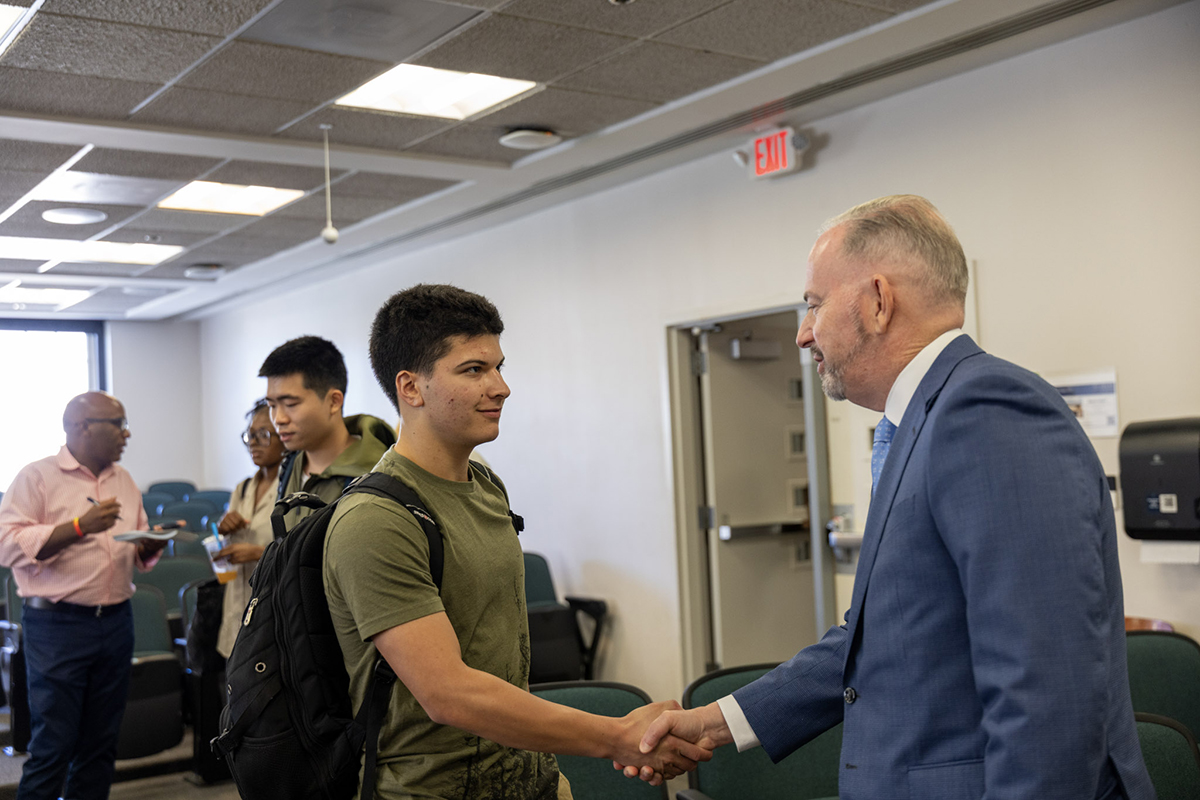
In an era of sharp political partisanship, a new political science course in Emory College aims to bridge the divide.
Through written essays on politics, debates in which students take views opposite their own, and consensus building exercises on ideological splits, “Policy Debates: Left and Right” encourages critical thinking and cross-ideological understanding.
Developed and co-taught by Pablo Montagnes, associate professor of political science, and Zac Peskowitz, Masse-Martin NEH Professor of Political Science, the class launched in August to help students build the analytical and interpersonal skills needed to engage meaningfully across political and moral divides.
“The focus is on public policy and opening civil debate and dialogue in the classroom,” Montagnes says. “We want students to see positions from different sides. We want students to hear liberal arguments and conservative arguments in a way that a liberal and a conservative would understand, not a caricature.”
Real-world insight
The course has also included guest speakers from across the political spectrum who have been invited to offer real world political experiences. They include Matthew Continetti of the conservative American Enterprise Institute; Melissa Kearney, the Gilbert F. Schaefer Professor of Economics at the University of Notre Dame; and Emory alum and former U.S. Sen. George LeMieux 91C.
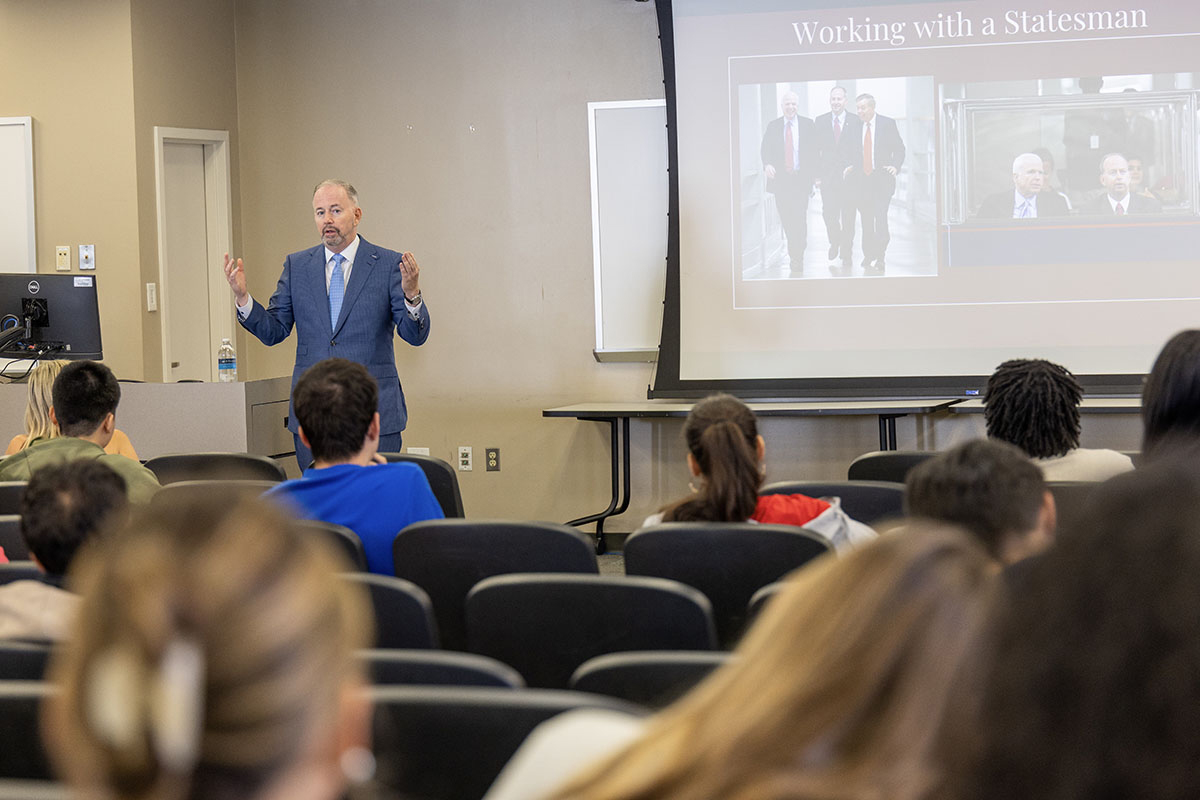
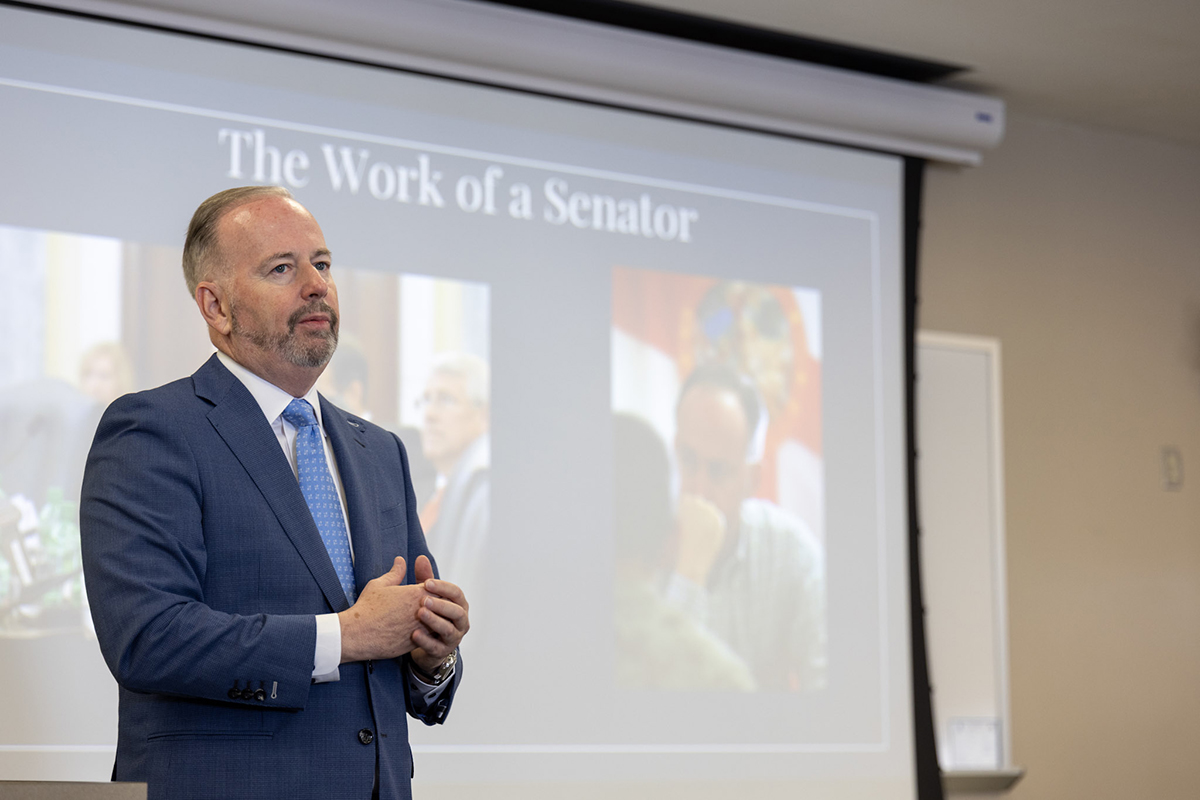
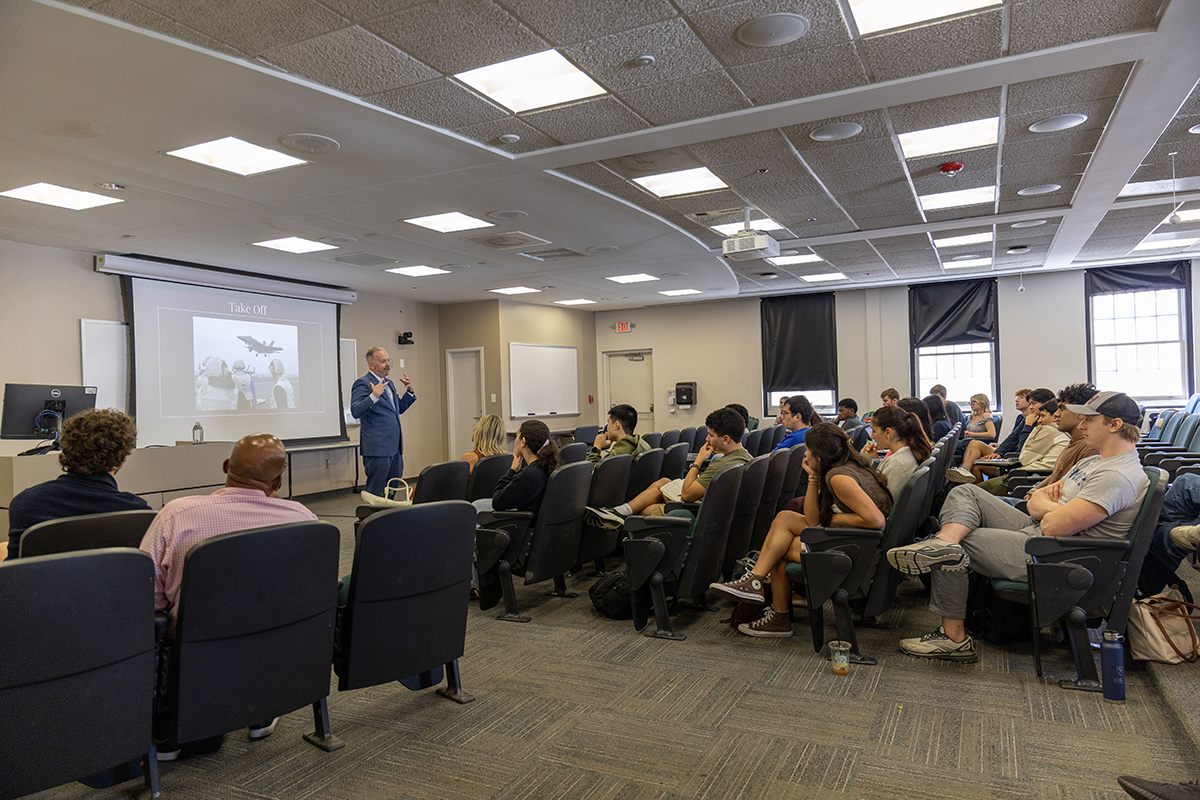
During his guest lecture to the class, LeMieux, who was appointed to the Senate by former Florida Gov. Charlie Crist in September 2009 to fill the remaining 16 months of former Florida Sen. Mel Martinez, told students that political leaders work together more often than not.
In Florida, for example, Republicans and Democrats are often aligned on environmental policy because the environment is critical to the state’s health, he says.
“In Florida, the environment is really not a political issue because, if the environment is not working in Florida, no one is staying,” says LeMieux, who graduated from Emory in 1991 with a bachelor's degree in political science.
But what often grabs headlines and the public’s attention are the legislative disputes, he says. And while there is bipartisanship, working across the aisle can have consequences when party loyalty outweighs personal conviction.
He learned that the hard way after he was one of only two Republicans to support former President Barack Obama’s small business jobs bill, which became law in 2010.
“I had bankers in Florida, who I am friends with, calling me saying, ‘We’ve got to get some money to give small businesses loans,’” he says, explaining his support for the bill. “I said, ‘I’m going to do what’s right. This is what’s right for my state.’”
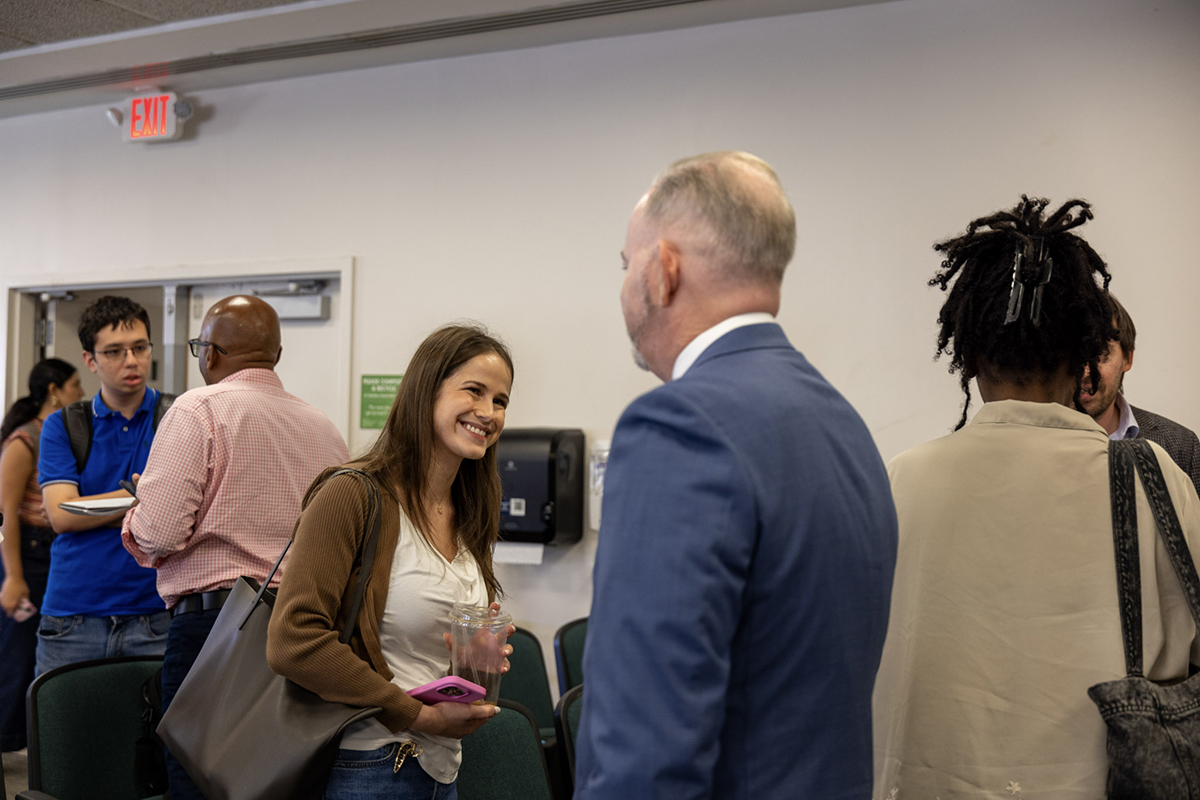
Students especially enjoyed hearing the inside perspective from the former senator and the opportunity to ask questions, including one about ranked-choice voting, an alternative voting method which allows voters to rank candidates in order of preference regardless of political affiliation.
“I’m all for exploring ranked-choice and for bringing second primaries back and bringing open primaries back. I think you get better candidates,” LeMieux told the group of about 60 students during the class.
Jerry Tian, a 20-year-old junior majoring in political science and economics, says LeMieux’s response was enlightening, especially as U.S. politics is often mostly a binary choice between the Republican and Democratic parties.
“It is indeed very inspiring to see someone thinking of ranked-choice voting,” says Tian, who is interested in comparative politics and thinks LeMieux’s comments reflect the nuances of political beliefs in the U.S. “It may address some of the issues this country has.”
Genesis Bond Hollingsworth, a political science and English/history major, says she enjoyed LeMieux’s lecture, especially because he is a conservative like herself.
“Being in this class and being able to hear his perspective was very refreshing. The students reacted cordially and with an open curiosity to his ideas,” says Hollingsworth.
LeMieux, who describes his Emory College liberal arts education and time with the university’s Barkley Forum debate society as life-changing, also encouraged students to dedicate some part of their career to public service to better their personal lives, boost their businesses and improve society.
Peskowitz says LeMieux demonstrated that it’s possible not only to work with people with opposing ideological beliefs, but also to solve problems, a key teaching goal of the class.
“The country is polarized, and people have very different opinions,” Peskowitz says. “Often they have a very hard time talking to each other. We want to work with students to try to prepare their future lives as citizens, whether they are going to be voters or serve in public life in some way. And they are going to have to work with people with different views from their own. We’re broadening the scope of what they are exposed to.”