


The Emory College Pathways Center has guided thousands of undergraduates toward internships, hands-on learning, research experiences and post-graduate opportunities since launching in 2022.
The Pathways Center has functioned as a virtual hub of five student-facing programs: career services, experiential learning, national scholarships and fellowships, pre-health advising and undergraduate research.
In January, it’s getting a new home, bringing everything together under one roof.
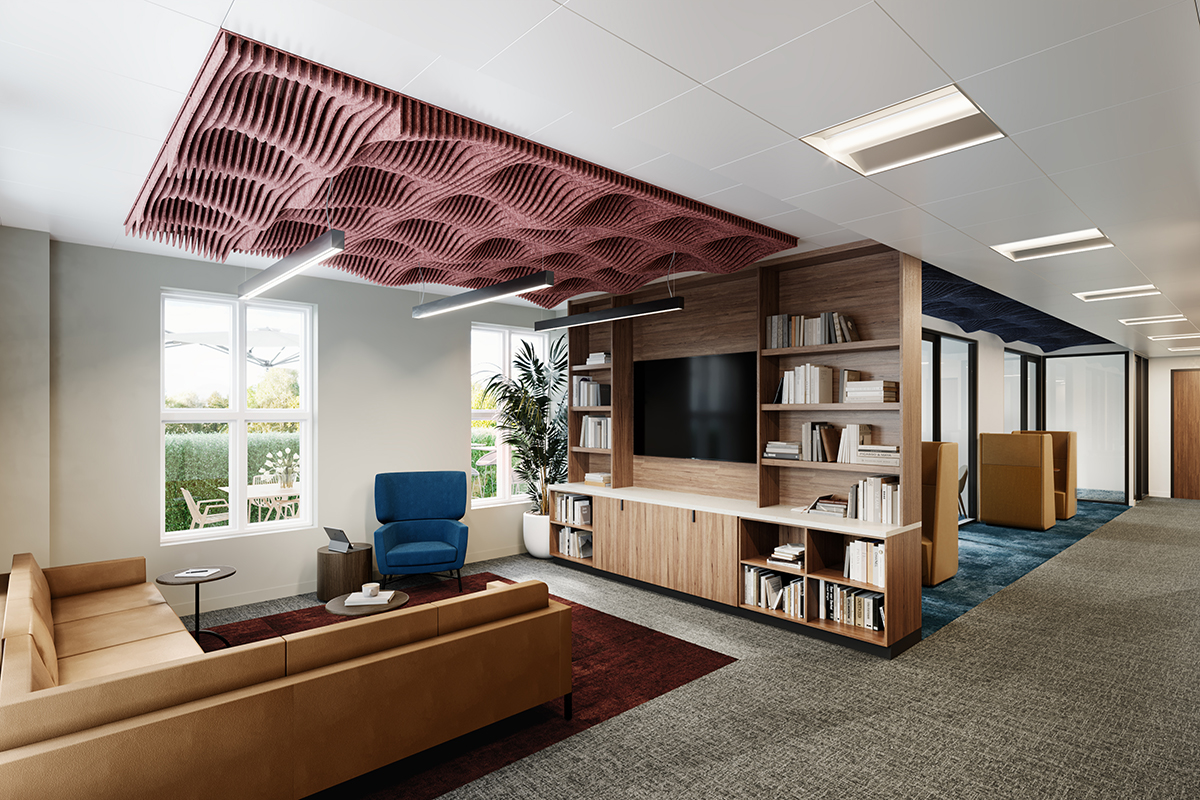
Spread across two floors of the Boisfeuillet Jones Center on Dowman Drive, peer advising will take place in a spacious café, recruiters and alumni will connect with potential interns in small meeting rooms, and larger rooms will host workshops on research or fellowship opportunities.
Students will be able to drop in for coffee or quiet study, book soundproof booths for private phone calls or virtual interviews, and check out professional attire from the Career Closet.
“There are so many things going on at Pathways that enhance the student experience,” says Alex Bolton, an associate professor of political science. “Having one location will be monumental for the many parts of the university community that Pathways brings together to support our students in gaining the tools that benefit them in the classroom and their careers.”
Making connections
Bolton has engaged with Pathways since its launch. He has connected students contemplating careers in law or policy with Career Communities advisors in Pathways’ Career and Professional Development team and directed those who fit specific award criteria to the National Scholarship and Fellowships Program.
He also acted as a faculty liaison for a Pathways Career Trek, the trips that connect students with successful Emory graduates in specific industries and cities. That role led Bolton to serve as faculty lead for the last two summers with the Pathways Scholars Program in Washington, D.C.
For that program, Bolton invited Emory alumni to join students throughout the eight-week experience, discussing how their substantive liberal arts education translated into different types of work and career paths.
“Hearing alumni talking about all the ways you can make a difference, you can see students almost rethink or expand what they imagine as their impact when they leave Emory,” he says.
One of Bolton’s Career Treks proved to be life-changing for senior Madyson Ferrer, a pre-law double major in economics and psychology.
Trip preparations included networking strategy ahead of a student-alumni mixer, where Ferrer connected with 1991 graduate Suzanne Gilbert Scheer, an attorney now working as a financial advisor. Their conversation led to Ferrer securing an internship at Scheer’s firm last summer — and a job when she graduates.
“I always recommend dropping in to Pathways to friends,” says Ferrer, a first-generation student from Maryland who has since become a program manager in the Career and Professional Development student fellows program at Pathways. “The renovation is going to make it so much more welcoming for students to come in and feel comfortable talking to people.”
Investing in students’ futures
The center’s prime location, just off the Quad and across from the Oxford Road Building, will make it more inviting for alumni and visitors while also helping meet growing student demand. More than 4,700 students engaged with Pathways offices last year, which are open to all Emory undergraduate students.
In just three years, Pathways programs helped acceptance rates for law and medical school programs jump to 98% and 85%, respectively. Alumni philanthropic support helped more than 1,000 students pursue internships, research and other experiential learning opportunities in that same period.
“The new Pathways Center will showcase Emory’s investment in the future of our students,” says Branden Grimmett, an associate dean in Emory College and the leader of the Pathways Center. “From graduate and professional schools, to fellowships and jobs, whatever they choose to do, students can discover it through our space.”
The renovated space is also set to become the starting point for campus tours from the nearby Office of Undergraduate Admission, increasing awareness among incoming students.
“It’s never too early to use Pathways services,” says Fei Xu, a psychology major and anthropology minor from China who initially went to Pathways as a first-year student seeking resume advice for applying to research positions across campus.
Now a senior, Xu has received multiple types of funding through the Pathways Center. She received support to participate in Emory’s Scholarly Inquiry and Research Experience program and, last summer, was supported by the internship fund while working as a researcher with the Rocky Mountain Biological Laboratory Marmot Project in Colorado.
Without this financial help, Xu says she would never have been able to conduct fieldwork. Now a research ambassador at Pathways, she advises other students while planning for graduate study in behavioral ecology with primates.
“The support from Pathways was an affirmation that this research is a worthwhile pursuit,” Xu says. “Pathways can definitely support your interest, especially for people who are not certain what careers exist in their field.”
‘An amazing resource’
Senior Deven Allen, a music performance major, agrees. Originally a pre-med major, Allen’s interest in music led him to research the cultural significance of Black protest songs.
A mentor at Pathways, career coach Micah Tucker, encouraged him to formalize the research and apply to Pathways’ Summer Undergraduate Research Experience (SURE) program funding for a deeper dive.
With additional support from the Department of Music, Allen traveled to Italy last summer as a dual study abroad student and researcher. Weeks after performing opera in two Cremona Festivals, he returned to campus to present — and perform — at the SURE symposium.
“These are the opportunities that give Emory students the momentum for a durable, lasting experience at different stages of their pre-professional journey,” says Paul Bhasin, the Donna & Marvin Schwartz Professor of Practice in Arts and Humanities, who leads the Italy program.
“Pathways helps us synchronize these efforts for students who are interested in artistic and humanistic inquiry to make the leap from the theoretical to the professional,” Bhasin adds. “It is very deliberate.”
Allen’s experience convinced him to apply to Teach for America, where he hopes to return to public school classrooms in his native California, before pursuing a master’s degree in music education.
“If it wasn’t for Micah and Pathways, my path to an education would have been a lot more difficult,” Allen says. “It is so meaningful to have that support so you can feel confident about your plans.”
Senior James Grant has encouraged other students to check out Pathways programs since he became an orientation leader his sophomore year. The Woodruff Scholar and chemistry major from Kentucky was initially intimidated to participate in the pre-health advising program.
By his junior year, Grant was a peer mentor himself. There, he supports first-and second-year students through insight into courses and volunteer work — including his own at Children’s Healthcare of Atlanta — while also focusing on MCAT prep and a Pathways boot camp for medical school applications.
“Pathways gave me access to people who were able to help me make the most out of my transition and growth at college, and now I get to be that person for others,” Grant says. “It’s an amazing resource.”