Sidewalk art enlightens the campus walkways

By Kimber Williams | Emory Report | Sep. 7, 2012

This is alt text

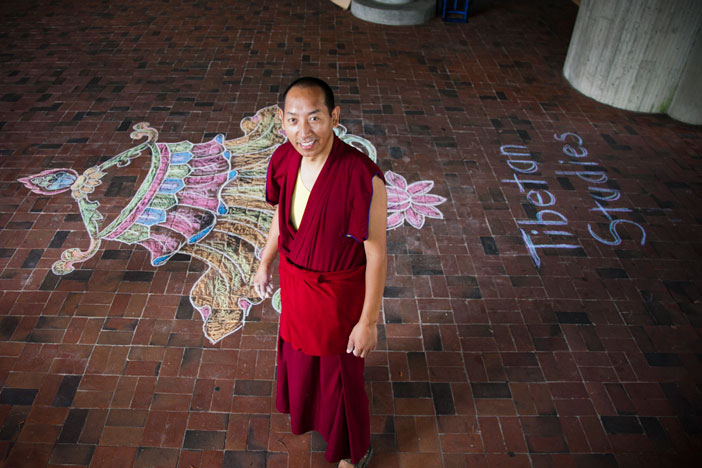
Tibetan monk Tsering Phuntsok sketched traditional Buddhist symbols across campus walkways on Sept. 5 to raise awareness of Tibetan Studies.

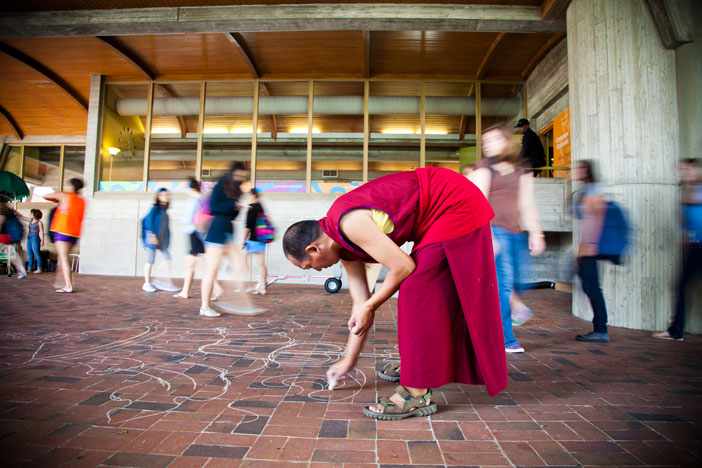
Phuntsok begins his drawing of the victory banner, one of four auspicious symbols he drew that day, in the Cannon Chapel breezeway. The victory banner represents the attainment of happiness.
Phuntsok, who is from Atlanta's Drepung Loseling Monastery Center for Tibetan Buddhist Studies, has been creating sand mandalas at Emory since 2003 and helped create the University¿s living mandala.

Phuntsok, who is from Atlanta's Drepung Loseling Monastery Center for Tibetan Buddhist Studies, has been creating sand mandalas at Emory since 2003 and helped create the University’s living mandala.

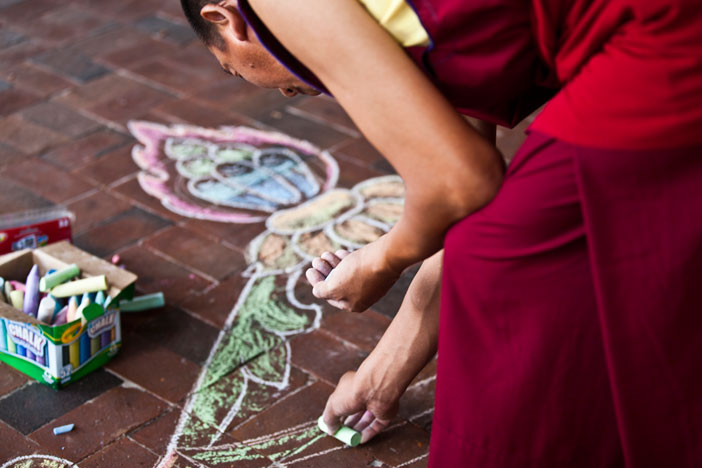
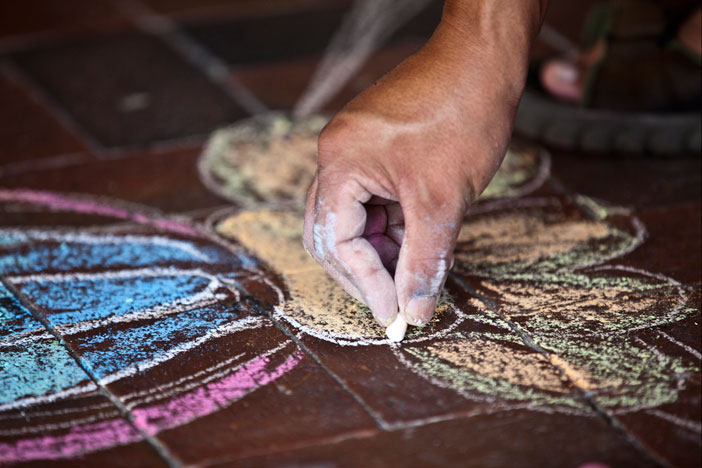
Though his creations could be washed away with the next rain, Phuntsok doesn't mind. The chalk drawings are meant to reflect life's impermanence; creating them is both an artistic and meditative experience.
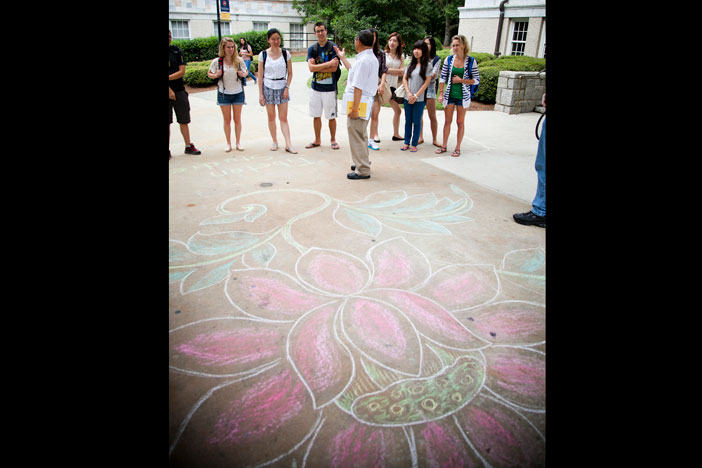
A second drawing of a lotus flower, placed near the Robert W. Woodruff Library, represents spiritual purity and divine origination.
Tsepak Rigzin, Tibetan language coordinator with the department of Middle Eastern and South Asian Studies, teaches students how to say "lotus flower" in standard Tibetan. The lotus flower drawing is near the Robert W. Woodruff Library.
PausePlayPlay
Photos by Emory Photo/Video.

With concrete as his canvas, Tibetan monk Tsering Phuntsok sketched traditional Buddhist symbols across campus walkways on Sept. 5 to raise awareness of Tibetan Studies, which are offered through Emory's Department of Middle Eastern and South Asian Studies (MESAS) and Department of Religion.  

Working with pastel sidewalk chalks, Phuntsok created four auspicious symbols: a white conch shell, representing the propagation of the Buddha's teachings; the lotus flower, representing spiritual purity and divine origination; the precious parasol, symbolizing protection; and the victory banner, representing the attainment of happiness.  

Phuntsok, who is from Atlanta's Drepung Loseling Monastery Center for Tibetan Buddhist Studies, has been creating sand mandalas at Emory since 2003 and helped create the University's living mandala — a garden near Cannon Chapel designed to inspire peace, compassion and harmony.  

Though his creations could be washed away with the next rain or this month's upswing in student foot traffic, Phuntsok doesn't mind. The chalk drawings are meant to reflect life's impermanence; creating them is both an artistic and meditative experience.